Finding vegetarian food in Chengdu is easier than many first-time visitors expect. The real challenge is not finding vegetables – it is knowing whether a dish that looks vegetarian was cooked with lard, meat broth, minced pork or meat-based seasoning.
This guide focuses on practical choices: dedicated vegetarian restaurants, Buddhist vegetarian food, Chengdu snacks that can work for vegetarians, and the Chinese phrases that help you order with fewer surprises.
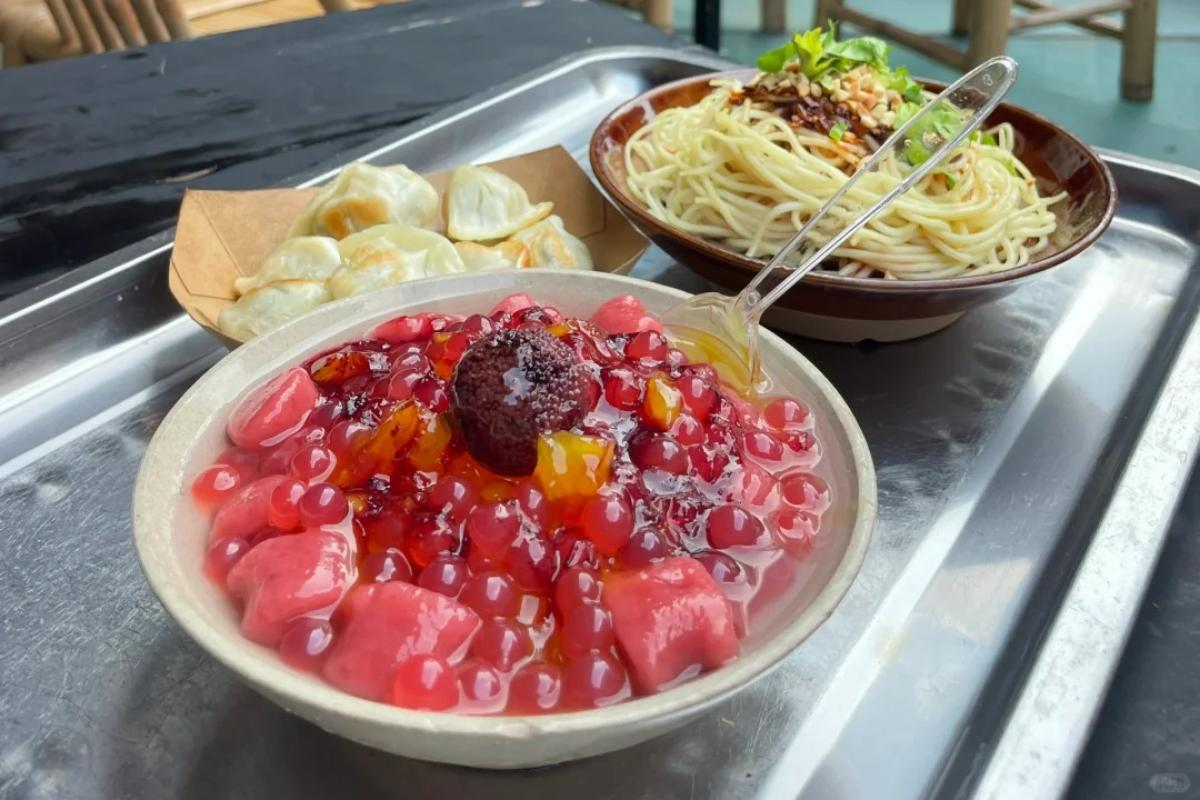
Is Chengdu Vegetarian-Friendly?
Yes, especially if you prepare a little. Chengdu has dedicated vegetarian restaurants and a long Buddhist vegetarian tradition. It also has many vegetable, tofu, noodle and potato dishes that can be adapted.
The important difference is that “no visible meat” does not always mean vegetarian. A vegetable dish may still be stir-fried with lard, and a noodle sauce may include meat stock or minced pork. Strict vegetarians and vegans should ask rather than assume.
Vegetarian Hot Pot: Sanbei Suxin
Sanbei Suxin Mountain Vegetarian Hot Pot (三辈素心山野素食小火锅) is one of the easiest ways to experience the social style of Chengdu hot pot without having to negotiate around a beef-fat or meat-based soup base.
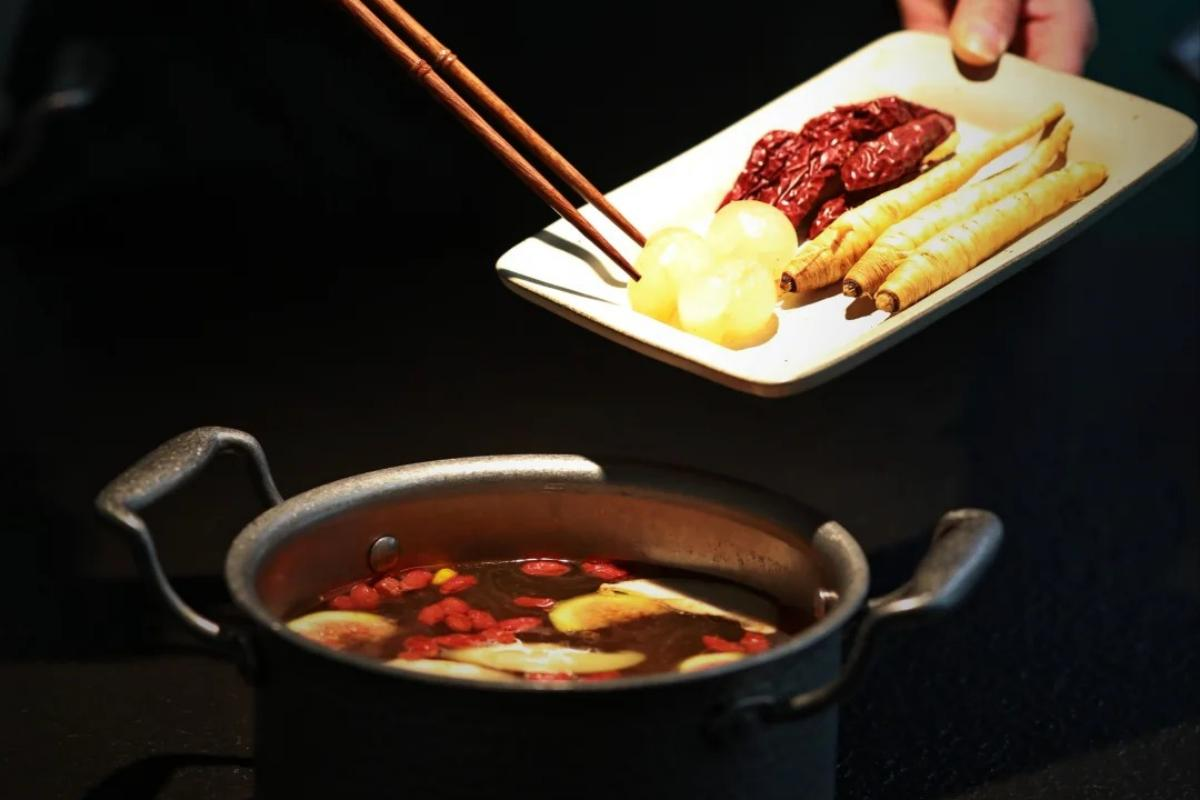
A dedicated vegetarian hot pot also removes much of the uncertainty around shared broth. You can focus on mushrooms, leafy vegetables, tofu and other plant-based ingredients instead of repeatedly checking whether each item has touched a meat stock.
Ama’s Highland Barley Field Vegetarian
Maluo / Ama’s Highland Barley Field Vegetarian (阿妈家青稞地素食) is another option from our local Chengdu recommendations. It suits travelers who want a relaxed vegetarian meal with choices such as curry, rice noodles and lighter dishes.
Restaurant branches, opening hours and menus can change, so save the Chinese name and verify the current listing in Amap before going.
Vegetarian Food at Wenshu Monastery
Wenshu Monastery is one of Chengdu’s best-known Buddhist sites and a natural place to connect a cultural visit with vegetarian food. Buddhist vegetarian cuisine in China has a long history of using tofu, mushrooms, vegetables and plant-based preparations to build flavor without meat.
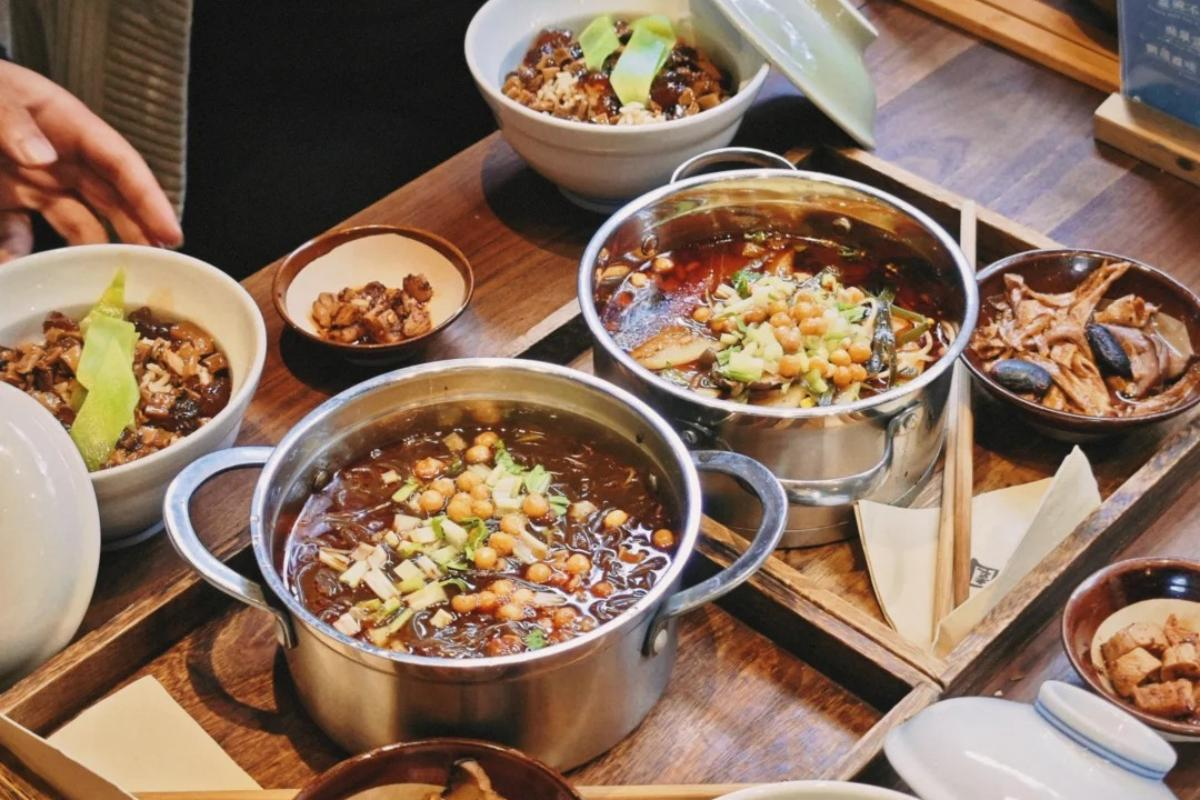
If you are staying in central Chengdu, Wenshu Monastery also fits easily into a half-day itinerary with nearby streets, tea and local snacks.
Sweetwater Noodles: Tianshui Mian (甜水面)
Sweetwater noodles are thick, chewy noodles coated in a sweet-savory, spicy sauce. The texture is very different from thin Sichuan noodles and makes them an easy snack to recognize.
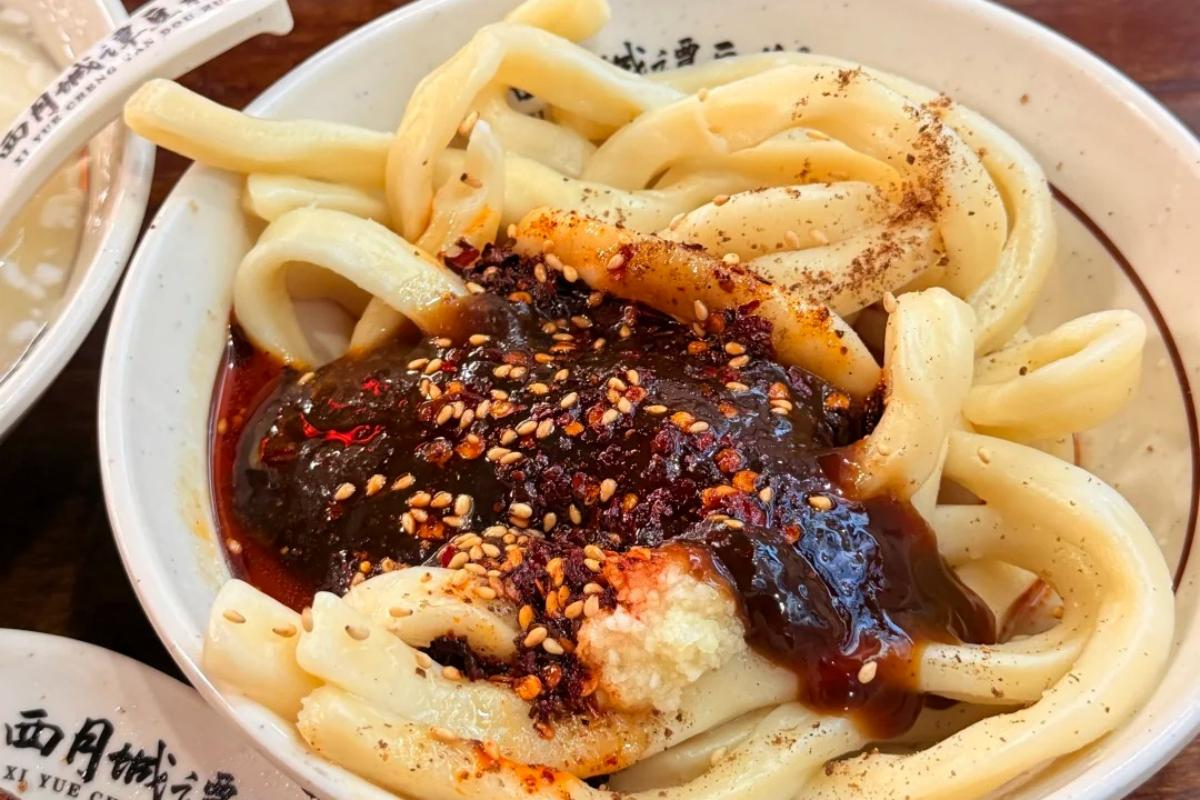
Vegetarian travelers should still ask about the sauce and cooking fat. A traditional-looking bowl is not automatically meat-free simply because there is no meat on top.
Ice Jelly: Bingfen (冰粉)
Bingfen is one of Chengdu’s easiest vegetarian-friendly desserts. The translucent jelly is usually served cold with brown sugar syrup and toppings such as fruit, raisins, peanuts or small glutinous-rice components.
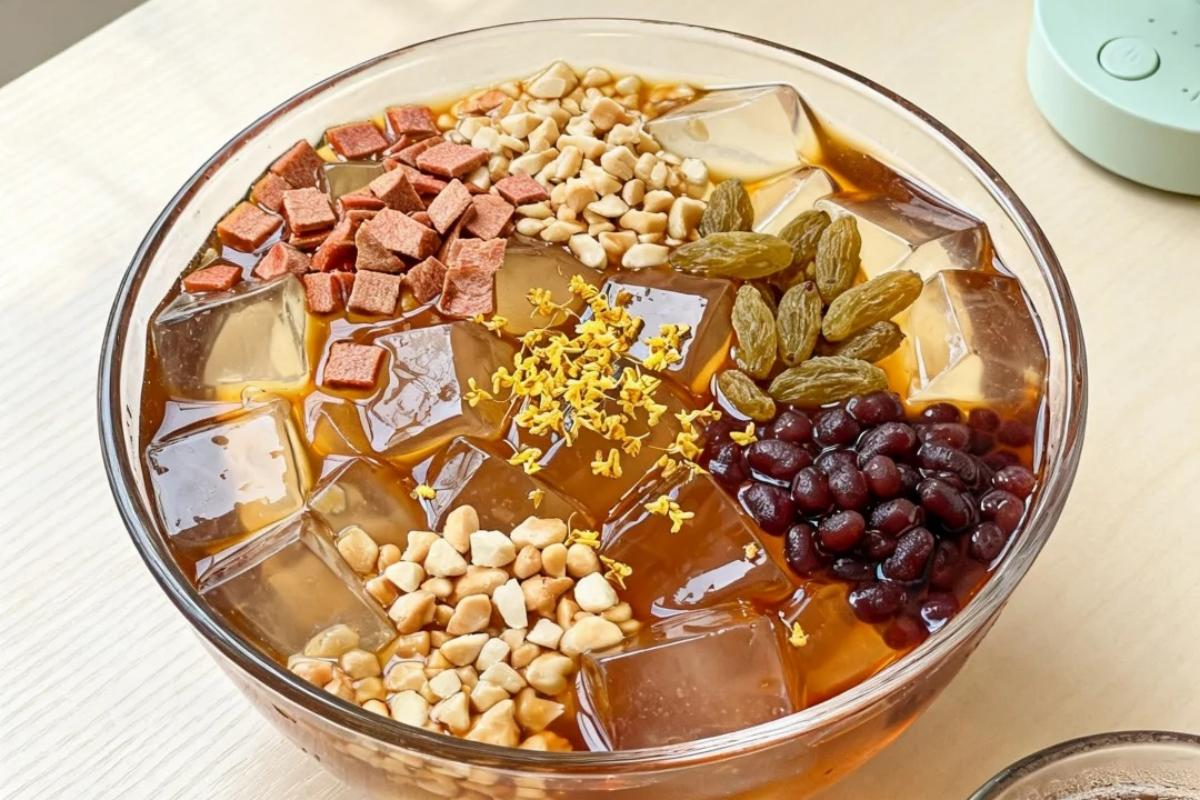
It is especially refreshing in Chengdu’s warm, humid summer. If you are vegan, check unusual toppings rather than assuming every customized version is plant-based.
Lianggao and Brown-Sugar Glutinous Rice Cake
Lianggao (凉糕) is a soft rice-based chilled dessert commonly served with brown sugar syrup. Hongtang ciba (红糖糍粑) is a chewy glutinous-rice snack served with brown sugar and often soybean powder. Both are useful additions when you want local Sichuan flavors beyond spicy food.
Wolf-Tooth Potatoes: Langya Tudou (狼牙土豆)
Wolf-Tooth Potatoes is a good literal English translation of langya tudou. The name sounds unusual until you see the potatoes: they are cut with a wave-shaped or crinkle cutter, creating serrated ridges that resemble pointed canine teeth. Langya literally means “wolf teeth,” which is where the snack gets its name.
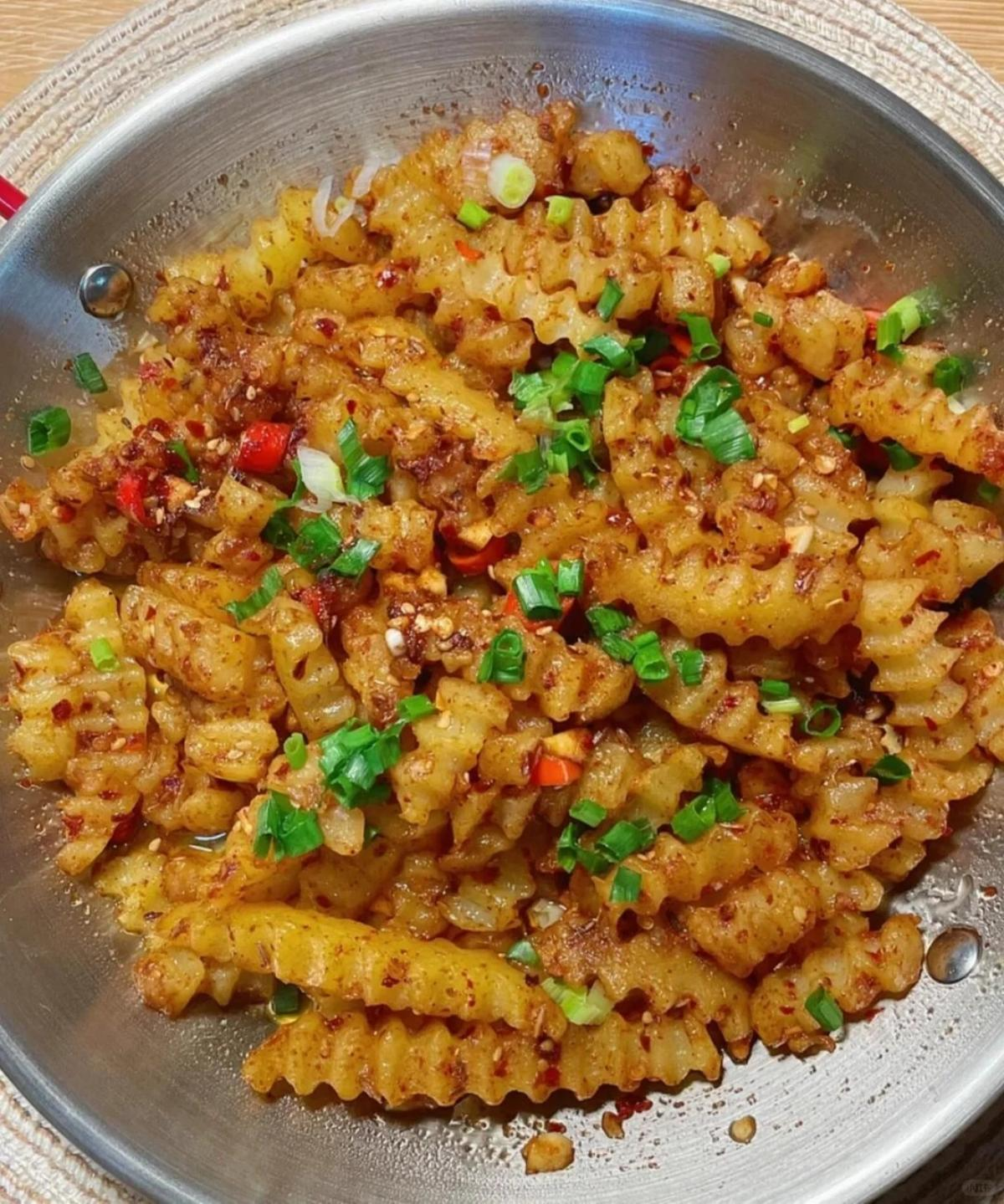
The potatoes are then cooked and tossed with seasonings that can include chili, Sichuan pepper, cumin, garlic, scallion and coriander. The ridged surface also holds seasoning particularly well.
For vegetarians, the potato itself is not the problem. Ask whether the vendor uses meat-based seasoning, shared cooking oil or additions you do not eat.
Other Chengdu Dishes That Can Be Vegetarian
- Stir-fried seasonal greens: ask for no lard and no meat stock.
- Tofu dishes: useful, but remember that classic mapo tofu normally contains minced meat.
- Liangpi or cold noodles: check the sauce and toppings.
- Vegetable skewers: confirm whether the broth or oil is shared with meat.
- Potato and mushroom dishes: often easy to adapt when ordered clearly.
- Douhua / tofu pudding: check the dipping sauce and any broth.
Hidden Ingredients Vegetarian Travelers Should Know
- 猪油 (zhūyóu): lard / pork fat
- 肉汤 (ròutāng): meat broth
- 高汤 (gāotāng): stock; ask what it is made from
- 肉末 (ròumò): minced meat
- 鸡精 (jījīng): chicken-flavored seasoning; strict vegetarians may want to avoid it
- 蚝油 (háoyóu): oyster sauce
Useful Chinese Phrases for Ordering Vegetarian Food
我吃素,不要肉,不要猪油,不要肉汤。
I am vegetarian. No meat, no lard and no meat broth.
这个菜里面有肉吗?
Does this dish contain meat?
可以不用猪油吗?
Can you make it without lard?
If you are vegan, be more specific about eggs, dairy, honey and oyster sauce. The English words “vegetarian” and “vegan” do not always map perfectly onto how a restaurant understands 素食.
Can Vegetarians Eat Regular Chengdu Hot Pot?
They can, but a dedicated vegetarian hot pot is much easier. A basket of vegetables does not make the meal vegetarian if the soup base contains beef fat, pork or meat stock. Shared broth and shared oil can also matter to strict vegetarians.
Our Practical Advice for Vegetarian Travelers
Save restaurant names in Chinese, keep one or two dietary phrases on your phone, and verify current opening hours before traveling across the city. In local restaurants, explain the ingredients you avoid instead of relying only on the word “vegetarian.”
Explore PandaRoaming’s Chengdu Food, Pandas & Culture Experiences if you want a private Chengdu itinerary that can be adjusted around vegetarian or vegan dining preferences.